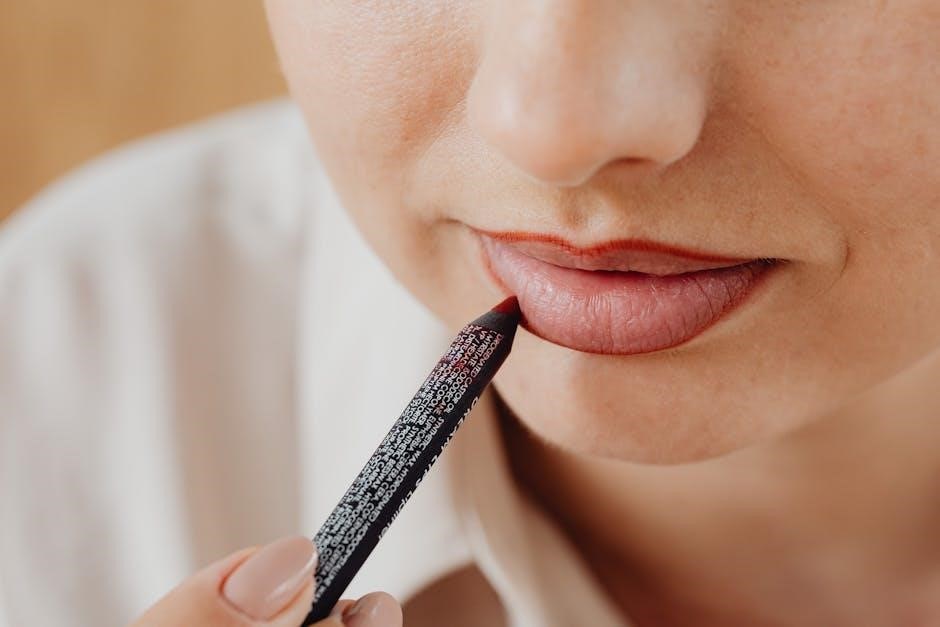
Lip augmentation is increasingly popular‚ driven by celebrity influence and demand for non-surgical options. Mastering safe and effective techniques‚ like the Φ (Phi) method‚ is crucial for practitioners.
Overview of Lip Augmentation
Lip augmentation‚ a sought-after cosmetic procedure‚ aims to enhance lip volume and shape‚ addressing concerns like thin lips or asymmetry. Modern techniques primarily utilize dermal fillers‚ particularly hyaluronic acid (HA)‚ for their reversibility and natural-looking results. The procedure’s popularity has surged‚ fueled by social media and celebrity endorsements. However‚ successful augmentation requires a thorough understanding of lip anatomy and injection techniques. Practitioners must prioritize patient safety and realistic expectations‚ offering personalized treatment plans. Training resources‚ such as those from DermaHub and Empire On-Demand‚ are vital for mastering these skills.
Historical Context of Lip Fillers
Early lip augmentation attempts involved materials like paraffin and silicone‚ often yielding unpredictable and sometimes harmful results. These substances lacked biocompatibility and could lead to migration and granuloma formation. The advent of collagen injections offered a temporary‚ more natural alternative‚ but required frequent treatments. A significant turning point arrived with the development of hyaluronic acid (HA) fillers in the early 2000s. HA’s biocompatibility and reversibility revolutionized the field‚ establishing a safer and more predictable approach. Today’s advanced techniques‚ like the Φ method‚ build upon this foundation‚ prioritizing safety and aesthetic precision.

Understanding Lip Anatomy for Safe Injection
Precise knowledge of lip vascular anatomy and key landmarks is paramount for safe filler application‚ minimizing risks and achieving optimal aesthetic outcomes for patients.
Detailed Vascular Anatomy of the Lips
Understanding the intricate vascular network within the lips is absolutely critical for practitioners performing dermal filler injections. The lips receive blood supply primarily from branches of the facial artery‚ notably the superior and inferior labial arteries. These arteries have numerous perforations‚ creating a complex and variable network.
The angular artery also contributes to lip perfusion. Knowledge of these key arteries‚ and their potential for occlusion‚ is essential to avoid vascular compromise. Careful assessment and slow injection techniques are vital to minimize risks‚ alongside a thorough understanding of anatomical variations.
Identifying Key Anatomical Landmarks
Precise landmark identification is foundational for safe and aesthetically pleasing lip filler injections. Key structures include the philtrum‚ Cupid’s bow‚ vermilion border‚ and mentalis muscle. Palpating these landmarks allows for accurate needle placement and avoids inadvertent vascular compromise.
The labiomental fold and the white roll are also crucial guides. Understanding the underlying muscle structure helps predict filler behavior. Consistent landmark identification‚ combined with a thorough understanding of lip anatomy‚ ensures predictable and natural-looking results‚ minimizing potential complications.
Assessing Lip Morphology and Patient Goals
Comprehensive assessment begins with evaluating the patient’s existing lip structure – projection‚ volume‚ symmetry‚ and shape; Consider the upper-to-lower lip ratio and the prominence of the Cupid’s bow. Equally vital is understanding the patient’s desired outcome; realistic expectations are paramount.
Detailed discussion about their aesthetic goals‚ referencing photographs‚ helps tailor the treatment plan. A thorough evaluation ensures the chosen technique and filler volume align with both the patient’s anatomy and their individual preferences‚ leading to satisfaction.
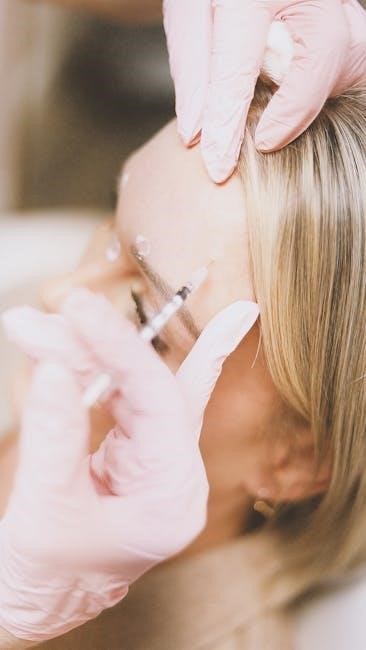
Commonly Used Filler Types
Hyaluronic acid (HA) fillers are prevalent due to their reversibility and natural-looking results‚ while non-HA options offer unique properties for specific concerns.
Hyaluronic Acid (HA) Fillers: Properties and Brands
Hyaluronic acid (HA) is a naturally occurring substance in the skin‚ making these fillers biocompatible and minimizing allergic reactions. HA attracts and binds water‚ providing volume and hydration. Different HA formulations vary in particle size and cross-linking‚ influencing their viscosity and duration.
Popular brands include Juvederm (Volbella‚ Ultra‚ and Voluma)‚ known for their smooth texture and versatility‚ and Restylane (Silk‚ Lyft‚ and Defyne)‚ offering options for subtle enhancement to significant volume. The choice depends on the desired outcome and lip anatomy. HA fillers are also reversible with hyaluronidase‚ offering a safety net if needed.
Non-HA Fillers: Considerations and Applications
Non-HA fillers‚ like polymethylmethacrylate (PMMA)‚ offer longer-lasting results due to their permanent nature‚ but carry increased risks. PMMA stimulates collagen production‚ creating a lasting volume effect. However‚ they are not easily reversible‚ and potential complications like granuloma formation are more common.
Their use in lips is less frequent due to these concerns‚ typically reserved for specific cases where prolonged correction is desired and the patient understands the risks. Careful patient selection and detailed counseling are paramount. Due to the potential for complications‚ extensive training is essential before utilizing non-HA fillers.
Filler Selection Based on Lip Concerns
Hyaluronic acid (HA) fillers remain the gold standard‚ offering versatility for various lip concerns. For subtle volume and hydration‚ a softer‚ lower G’Prime filler is ideal. Addressing vertical lip lines benefits from fillers with higher cohesivity.
Patients seeking significant volume augmentation may require a firmer filler‚ but careful assessment is crucial to avoid an unnatural appearance. Consider lip morphology; thinner lips often need gradual volume building. Understanding patient goals – definition‚ projection‚ or overall fullness – guides optimal filler choice and technique.
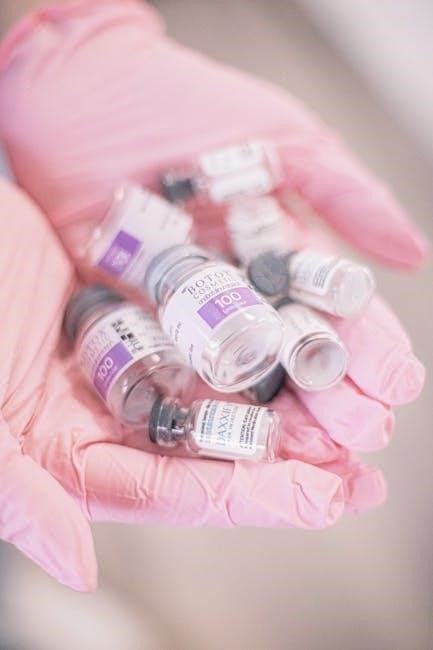
The Φ (Phi) Technique: A Step-by-Step Guide
The Φ (Phi) technique utilizes the golden ratio for aesthetically pleasing lip augmentation‚ ensuring balanced proportions and natural-looking results through precise injection points.
Principles of the Golden Ratio in Lip Aesthetics
The golden ratio (Φ)‚ approximately 1.618‚ represents harmonious proportions found in nature and art‚ and increasingly‚ in aesthetic medicine. Applying this principle to lip augmentation aims for balanced and naturally beautiful results. Specifically‚ the ratio guides ideal lip height to width‚ and the proportion between the upper and lower lip.
Practitioners utilizing the Φ technique meticulously assess facial features to determine the optimal lip dimensions adhering to this ratio. This approach moves beyond simply adding volume‚ focusing instead on creating symmetry and enhancing overall facial harmony. Understanding and implementing these principles is key to achieving predictable and aesthetically pleasing outcomes.
Detailed Injection Points and Angles
The Φ technique utilizes precise injection points to achieve natural-looking lip augmentation. Initial injections typically target the vermillion border to define lip shape‚ using a 30-45 degree angle. Subsequently‚ injections focus on the lip body‚ employing a linear threading or fanning technique with a shallower angle (15-30 degrees).
Careful attention to vascular anatomy is paramount; aspiration before injection is crucial. Strategic injection points‚ combined with appropriate filler distribution‚ minimize risks and maximize aesthetic results‚ creating balanced volume and a refined lip contour.
Volume Distribution for Natural-Looking Results
Achieving natural results with lip fillers requires careful volume distribution‚ mirroring the lip’s natural contours. The Φ technique emphasizes a balanced approach‚ typically allocating approximately two-thirds of the filler to the lower lip and one-third to the upper lip‚ though this varies based on individual anatomy.
Strategic placement within the lip body‚ focusing on the vermillion and avoiding overfilling‚ is key. Subtle adjustments to the lip borders and bow enhance definition without creating an artificial appearance‚ ensuring harmonious facial aesthetics.
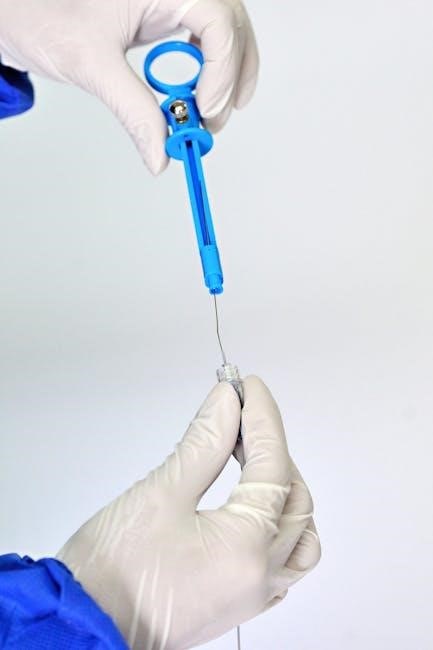
The 3B Approach to Lip Enhancement
The 3B approach – Borders‚ Bow‚ and Body – provides a structured method for precise‚ artistic lip enhancement‚ achieving natural and balanced results.
Defining Lip Borders
Establishing clear lip borders is foundational to a refined enhancement. Precise definition prevents filler migration and creates a youthful‚ sculpted appearance. Practitioners utilize small boluses of filler along the vermillion border‚ carefully assessing the natural lip line. This step addresses loss of definition often associated with aging‚ or naturally thin lips.
The goal isn’t to dramatically overdraw‚ but to subtly restore and enhance the existing structure. Understanding the patient’s anatomy and desired outcome is paramount‚ ensuring a harmonious and natural-looking result. Proper border definition provides a canvas for subsequent shaping and volumization.
Shaping the Lip Bow
Refining the lip bow‚ or Cupid’s bow‚ significantly impacts overall aesthetic harmony. Subtle adjustments can enhance facial symmetry and create a more defined‚ youthful appearance. Techniques involve precise filler placement at the peaks of the bow‚ carefully considering the patient’s natural anatomy. Overcorrection can appear unnatural‚ so a conservative approach is vital.
The 3B approach emphasizes shaping before volumizing. Addressing asymmetry or flatness in the bow creates a balanced foundation. Practitioners often use linear threading or micro-boluses to achieve a smooth‚ natural contour‚ avoiding a “duckbill” appearance.
Adding Volume to the Lip Body
Increasing lip volume should complement the refined borders and bow‚ creating a balanced and natural result. The body of the lip requires strategic filler placement to avoid distortion or an overly artificial look. Techniques like linear threading or fanning distribute the product evenly‚ enhancing projection and fullness.
Careful consideration of the patient’s existing lip structure is paramount. The goal isn’t simply to add volume‚ but to restore youthful plumpness and improve lip proportion. Practitioners must assess the vermilion border and avoid excessive filler migration‚ maintaining a soft‚ supple texture.

Advanced Injection Techniques
Mastering techniques like linear threading‚ bolus injections‚ and fanning allows for precise volume distribution and customized lip enhancement‚ achieving natural-looking results.
Linear Threading Technique
Linear threading involves depositing small amounts of filler in a continuous‚ parallel line within the lip tissue. This technique is excellent for creating subtle volume and smoothing lip lines‚ particularly in the vermillion border. It’s favored for its ability to distribute filler evenly and minimize the risk of nodularity. Practitioners often utilize this method to build foundational volume before employing other techniques. Careful consideration of injection depth and direction is vital to avoid vascular compromise. Mastering this technique requires a delicate touch and thorough understanding of lip anatomy‚ ensuring a natural and refined aesthetic outcome.
Bolus Technique
The bolus technique centers around injecting discrete‚ concentrated deposits of filler into specific points within the lips. This method excels at creating defined volume and shaping‚ particularly useful for augmenting the lip body or enhancing the Cupid’s bow. It’s often employed to address asymmetries or to add projection to specific areas. However‚ bolus injections require precise placement to prevent lumpiness or migration. Skilled practitioners carefully assess the underlying anatomy and inject slowly‚ aspirating frequently to ensure the filler isn’t inadvertently placed intravascularly‚ prioritizing patient safety.
Fanning Technique
The fanning technique involves a series of small‚ linear injections spread across the lip‚ resembling a fan. This approach is ideal for creating a subtle‚ natural-looking volume increase throughout the entire lip‚ avoiding concentrated lumps. It’s particularly effective for individuals seeking overall lip enhancement rather than dramatic reshaping. Practitioners typically use a small needle and inject at a shallow angle‚ carefully distributing the filler evenly. Mastering this technique requires a delicate touch and a thorough understanding of lip anatomy to achieve harmonious results.
Managing Complications
Prompt recognition of vascular occlusion‚ swelling‚ bruising‚ or allergic reactions is vital for patient safety following lip filler injections; immediate intervention is key.
Recognizing and Addressing Vascular Occlusion
Vascular occlusion represents the most serious‚ though rare‚ complication of lip filler injections. Clinicians must be vigilant for signs like immediate‚ intense pain‚ blanching‚ dusky discoloration‚ or even skin necrosis. Rapid assessment is paramount; instruct the patient to immediately report any such symptoms.
Treatment involves immediate cessation of injection‚ application of hyaluronidase to dissolve the filler‚ and warm compresses. Documentation of the incident is crucial‚ alongside potential referral to a vascular surgeon for further evaluation and management. Proactive anatomical knowledge and aspiration techniques during injection significantly reduce this risk.
Handling Swelling and Bruising
Swelling and bruising are common‚ expected side effects following lip filler injections. Patients should be thoroughly informed about this beforehand‚ managing expectations. Applying ice packs intermittently for the first 24-48 hours minimizes swelling. Gentle massage can aid in dispersing the filler and reducing bruising‚ but should be done cautiously;
Oral Arnica Montana and bromelain supplements may also help reduce bruising. Advise patients to avoid blood-thinning medications (aspirin‚ ibuprofen) prior to the procedure‚ if medically safe. Significant or prolonged swelling warrants follow-up to rule out other complications.
Preventing and Treating Allergic Reactions
Allergic reactions to lip fillers are rare‚ particularly with hyaluronic acid (HA) fillers‚ but preparedness is vital. A thorough patient history‚ including allergies‚ is essential during consultation. While HA is biocompatible‚ hypersensitivity is possible.
Clinicians should have emergency protocols and medications (epinephrine‚ antihistamines‚ corticosteroids) readily available. Immediate recognition of symptoms – hives‚ itching‚ swelling‚ difficulty breathing – is crucial. Non-HA fillers carry a slightly higher allergy risk‚ necessitating pre-treatment allergy testing when indicated.

Pre- and Post-Injection Care
Detailed consultations and clear post-injection instructions are paramount for optimal results and patient safety‚ managing expectations and minimizing potential side effects.
Patient Consultation and Preparation
A thorough patient consultation is the cornerstone of successful lip filler treatment. This involves a detailed discussion of the patient’s goals‚ expectations‚ and medical history‚ including any allergies or medications. Practitioners must assess lip morphology‚ identifying key anatomical landmarks and vascular structures. Realistic expectations regarding achievable results and potential side effects – like swelling or bruising – should be clearly communicated.
Prior to injection‚ patients should discontinue blood-thinning medications and supplements as advised by their practitioner. Avoiding alcohol for 24-48 hours beforehand is also recommended to minimize bruising. A comprehensive understanding of the procedure and informed consent are essential components of preparation.
Post-Injection Instructions and Follow-Up
Following lip filler injections‚ patients should adhere to specific post-care instructions. This typically includes avoiding strenuous exercise‚ excessive sun exposure‚ and extreme temperatures for a designated period. Gentle application of ice packs can help minimize swelling and discomfort. Avoid touching or massaging the treated area unless specifically instructed by the practitioner.
A follow-up appointment is crucial to assess the results‚ address any concerns‚ and determine if further adjustments are needed. Patients should report any unusual symptoms‚ such as persistent pain‚ signs of infection‚ or vascular occlusion‚ immediately.
Managing Expectations and Potential Side Effects
Realistic expectations are paramount before undergoing lip filler treatment. Discuss desired outcomes with your practitioner‚ understanding that results vary based on individual anatomy and filler type. Common‚ temporary side effects include swelling‚ bruising‚ redness‚ and tenderness at the injection sites. These typically subside within a few days to a week.
Rare but serious complications‚ like vascular occlusion or allergic reactions‚ require immediate medical attention. Thorough patient education regarding potential risks and benefits is essential for informed consent and satisfaction.
Legal and Ethical Considerations
Informed consent‚ scope of practice adherence‚ and meticulous documentation are vital for patient safety and legal compliance when performing lip filler injections.
Informed Consent and Patient Safety
Comprehensive informed consent is paramount before any lip filler procedure. Patients must understand potential risks – including swelling‚ bruising‚ vascular occlusion‚ and allergic reactions – alongside realistic expectations. Detailed discussion of the chosen filler type‚ injection technique (like the Φ technique or 3B approach)‚ and post-procedure care is essential.
Practitioners must verify patient suitability‚ considering medical history and allergies. Emphasis should be placed on the minimally invasive nature‚ reversibility (with hyaluronic acid fillers)‚ and the importance of selecting a qualified‚ board-certified injector to minimize complications and ensure optimal results.
Scope of Practice and Regulations
Regulations surrounding lip filler injections vary significantly by location‚ impacting who can legally administer them. Many jurisdictions restrict practice to licensed medical professionals – physicians‚ nurses‚ and physician assistants – with specific training in dermal fillers and facial anatomy.
Understanding the scope of practice is crucial; exceeding authorized procedures can lead to legal repercussions. Practitioners must adhere to local guidelines regarding patient assessment‚ injection techniques‚ and emergency preparedness. Maintaining current certifications and participating in continuing medical education (CME) demonstrates commitment to safe and compliant practice.
Documentation and Record Keeping
Meticulous documentation is paramount in lip filler procedures‚ serving both legal and patient safety purposes. Records should include a detailed patient consultation‚ outlining medical history‚ allergies‚ and aesthetic goals.
Injection details – filler type‚ volume used‚ injection points‚ and any observed reactions – must be accurately recorded. Before-and-after photographs are essential for tracking results and addressing potential concerns. Proper record-keeping demonstrates due diligence‚ facilitates continuity of care‚ and protects practitioners in case of complications or legal inquiries.

Resources for Further Training
DermaHub and Empire On-Demand offer comprehensive online courses and manuals for mastering advanced lip filler techniques and ensuring patient safety.
Online Lip Filler Training Courses (e.g.‚ DermaHub)
DermaHub provides robust online lip filler training‚ emphasizing a deep understanding of lip anatomy and safe filler application. Their courses cover vascular anatomy – a critical component for avoiding complications. Students learn to master techniques like the 3B approach (Borders‚ Bow‚ and Body) for achieving natural‚ artistic results. These programs often include detailed video demonstrations and practical assessments. Access to such resources is vital in this rapidly growing filler industry‚ ensuring practitioners are well-trained and equipped to deliver consistently excellent outcomes while prioritizing patient well-being and safety.
Advanced Lip Filler Techniques Manuals (e.g.‚ Empire On-Demand)
Empire On-Demand offers a comprehensive Advanced Lip Filler Techniques Manual‚ boasting over 300 five-star reviews‚ signifying its high quality and value. These manuals delve into intricate techniques beyond foundational training‚ focusing on precision and artistry. They emphasize innovation and collaboration‚ supporting academic achievement for practitioners. The content likely covers advanced methods like linear threading‚ bolus‚ and fanning‚ alongside detailed anatomical considerations. Such resources are essential for those seeking to refine their skills and deliver consistently superior‚ natural-looking lip enhancements.
Continuing Medical Education (CME) Opportunities
Staying current with evolving techniques is vital in aesthetic medicine. Numerous CME opportunities focus on lip filler injection‚ often incorporating hands-on workshops and detailed anatomical studies. These programs frequently cover vascular anatomy‚ complication management‚ and advanced injection methods like the Φ technique and the 3B approach. Accredited courses ensure practitioners meet regulatory requirements and demonstrate a commitment to patient safety. CME credits are often available‚ supporting professional development and enhancing expertise in delivering optimal‚ natural-looking results.